
Book review: Michael J. Fox’s unique, relatable PD story
(Note: This review is of Michael J. Fox’s first book, which I deem still relevant 20+ years after publication. His fifth book, Future Boy, came out recently. When I can get my shaky hands on a copy, I’ll read and review it, too.)
In a lot of ways, Michael J. Fox’s first years after his Parkinson’s diagnosis would mirror those of just about anyone with the disease.
He too experienced the early finger twitches, shock and denial, the hiding of tremors at work, the search for the right doctor, depression, and the wrestle over who to tell.

For those of us diagnosed with PD decades after Fox was, those same challenges still resonate.
A while back I picked up Fox’s first book, Lucky Man, A Memoir, which he wrote in 2002. I had already read (and reviewed) his fourth book, No Time Like the Future, after it came out in 2020. Now I wanted to see how he dealt with the early years of his Parkinson’s.
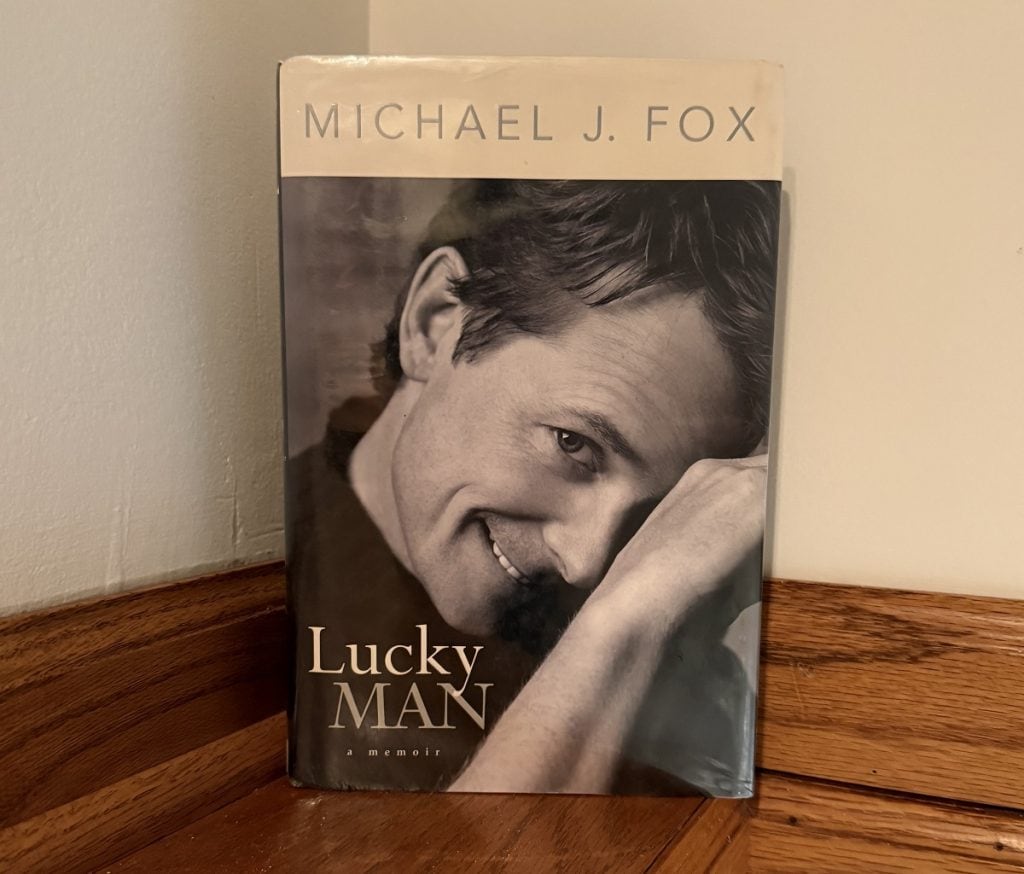
In Lucky Man, Fox recounts his rise to stardom, highlighting the good (marrying Tracy Pollan), the bad (feeling imposter syndrome), and the ugly (mired for years in alcoholism).
As images of his face were splashed on teen magazines and gossip tabloids, he grappled with the lack of authenticity in relationships that being a celeb brought. He found comfort in remaining close with his family in western Canada but was sent reeling when his father died at age 61.
Two years later, Fox was diagnosed with Parkinson’s, which he saw only as an “old person’s disease.” He was 29.
Something powerful
Fox’s humor, wry and clever, keeps an upbeat tone to the book, which in the first half focuses almost solely on his career. That sets the stage for Fox to explain the unique situation he faced as a Hollywood star new to Parkinson’s.
Most of us didn’t have to worry about being stalked by paparazzi or misquoted by reporters sensationalizing the whole thing when we revealed our Parkinson’s.
But most of us also don’t have the ear of congressional leaders who can fund more research, or a stream of invitations to news shows for advocating for Parkinson’s.
Fox’s celebrity status easily lifted his story into something powerful that the rest of us likely won’t experience.
Yet while reading his memoir 23 years after its publication, I found I was nodding my head constantly, underlining his many statements and experiences that I could relate to.
Seeing similarities
It was comforting in an odd way to read that Michael J. Fox has had to plow through the fears, questions, frustrations, and worries that I also carry.
Like him, I hid my disease as long as I could. I put on my game face for others even when I feel lousy. I didn’t start a foundation, but I did create this blog (OK, he wins). I’ve tried to stay optimistic. And I want to fight Parkinson’s, too.
Maybe my experience was more like his than I had thought.
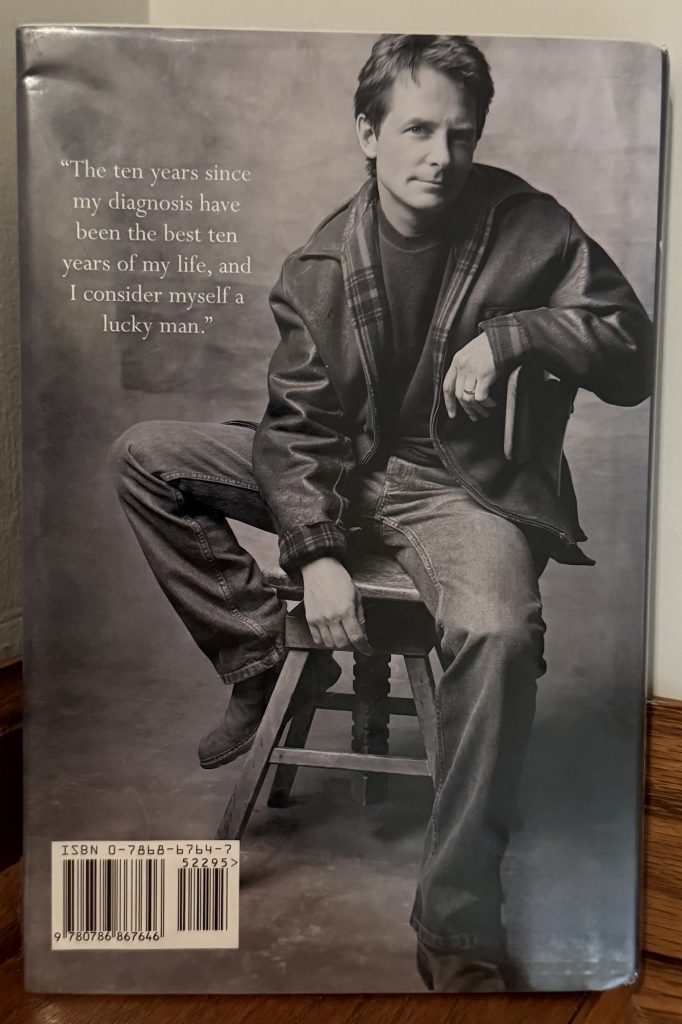
By the time Lucky Man was published, Fox already had sparked a national conversation about Parkinson’s.
Today, we witness his commitment to finding a cure: The Michael J. Fox Foundation has raised $2.5 billion for Parkinson’s research.
He writes that if you could strike a deal that would magically take away the first decade after his diagnosis and bring him back to the person he was before, “I would, without a moment’s hesitation, tell you to take a hike.”
Michael J. Fox and I and a million others share a disease that ultimately forces a new perspective on just about everything in life. It made him a changed person. Even a lucky one.
In many ways, I can relate to that.
A final note
The face of Michael J. Fox is being splashed on magazines once again. This time it’s on People. In the October cover story he talks about the new book and his return to TV on Shrinking, as well as his life 34 years after he was diagnosed with Parkinson’s disease.
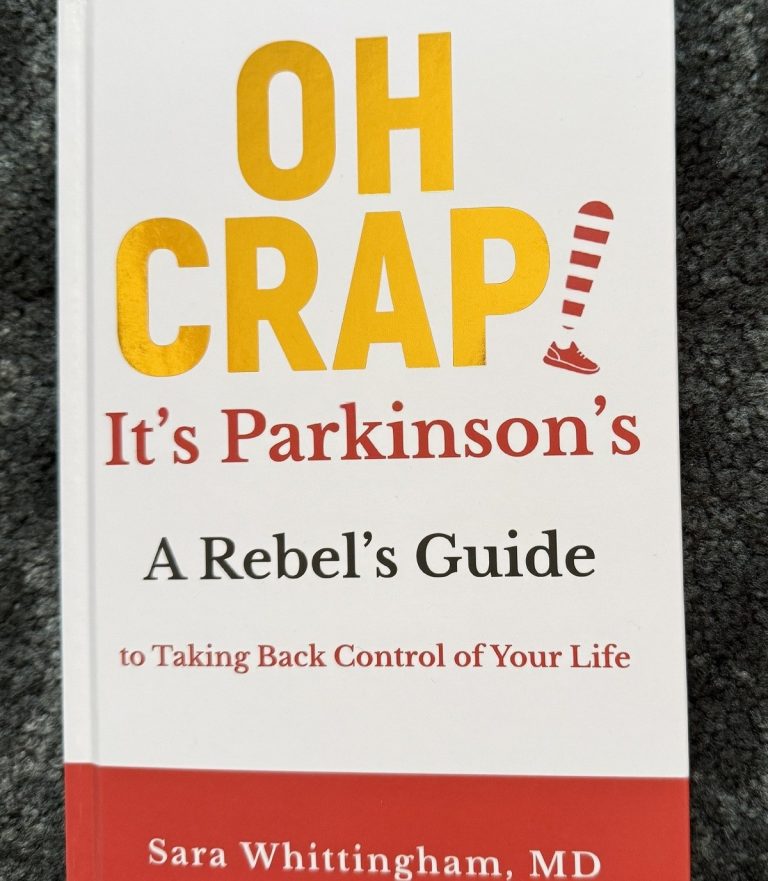
Other book reviews:


Thank you for your book (review). I read it to myself and one chapter of the first page out loud. It was very interesting, and I appreciate the life story.
Sandra Domingo Javier, one of your readers. (My apologies if I used wrong wordings to describe my feelings at this time of the day. God bless you.)