
Navigating uneven surfaces while hiking with Parkinson’s
Hiking on trails with uneven surfaces has a unique set of challenges for people with Parkinson’s disease. Symptoms like balance and gait problems can make bumpy trails not only difficult, but dangerous.
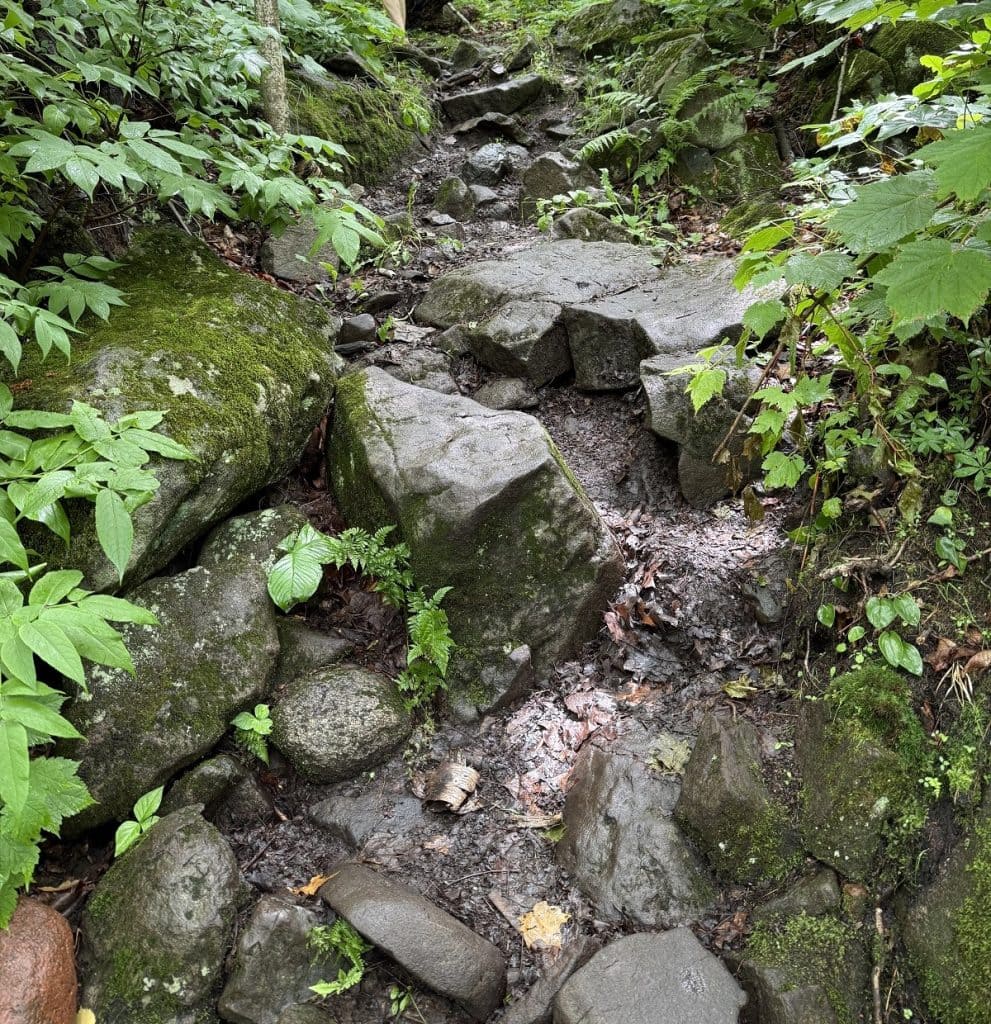
I’ve been a hiker most of my life. When I was diagnosed with this fiendish and progressive disease, I knew that rocks and roots, stone staircases, and other tripping hazards would eventually be tougher for me to navigate.
Can such impending hardship be mitigated?
I, for one, believe it can, and studies seem to back it up,
The science
Foot placement in uneven terrain is a fascinating area of research. I came across this video of a study on how eye movement and walking on uneven surfaces are linked. The most adept hikers kept their gaze out in front, multiple steps ahead, in order to place their feet in stable locations, the study showed.

There is a whole lot of research on this topic.
I wonder if this study could be expanded for people with movement disorders, who struggle with less-sure footing.
What can a person do?
If you are concerned about your own current or future abilities on tricky terrain, as I am, have hope. Here are a few things to do now:
Ways to prepare
Practice
Prepare by finding places to walk that have stairs and uneven surfaces. Is there a cobblestone-type street or driveway nearby? A beach with soft sand? A wooded path with little upkeep? Even grass fields can be bumpy below the blades.
Those of us with Parkinson’s typically go slower, take shorter steps, and have reduced walking cadence (rate of steps per minute) on irregular surfaces, studies have shown. Regular training walks will help by developing muscle memory to use when hiking a trail that has obstacles.
Strengthen
Have you ever turned or sprained your ankle? I have, and it was a big setback, not to mention the pain it caused. Those trail rocks and roots are just waiting to ambush your feet and ankles, and you need to be ready.

Strengthening the joints, ligaments, and muscles below your knees is excellent preparation.
Here is just one website with some simple exercises for stronger ankles. Some of them could be done while you watch TV or sit at your desk. Ask your doctor or physical therapist for ideas.
Gear up sensibly
Bring hiking poles
A pole is a walking aid, but it’s one that doesn’t label anyone as having a disability — and that’s nice for hikers with Parkinson’s. Nobody looks twice because so many other hikers use them! And with good reasons, like better balance and less leg fatigue.

Since poles occupy your hands, use a backpack or hip pack to securely carry your keys, phone, water, meds, and anything else you bring. Juggling all that stuff leads to droppage, and what falls to the ground must be picked up. That in turn requires extra exertion and some fancy balance moves.
Watch what you wear
Clothes that don’t fit right won’t feel right, and that’s a distraction no hiker needs. Remember to tie shoelaces in double knots, as bending and stooping to re-tie them uses extra energy.
Wear the right shoes
Get shoes that fit well. Wearing shoes that are too loose or too long increases the risk of stumbling. Thick socks is one of those Band-Aid solutions — don’t rely on it!
Hiking boots help with stability, for sure. However, their thickness and bulk can mask important sensory information from the ground to your feet to help with balancing. Reconsider bulky boots for some trails; lighter, low-top shoes with good traction may be enough.
A couple more tips
- The perils of texting and driving have long been known, but what about texting and walking? On rough terrain, the two add up to trouble. Keep your eyes on the trail in front of you. Don’t be a distracted hiker. (That goes for taking photos, too. Plant your feet, then snap the picture.)
- Trails that are regularly maintained typically have fewer tripping spots like rocks and ridges jutting up. When possible, opt for well-maintained and well-traveled trails

It’s mind-boggling how quickly our brains can process complex geometry and make decisions for placement of feet to help ensure we don’t fall.
Parkinson’s disease slows people down, making stable stepping a bigger challenge. But it’s one that I believe is worth continuing to meet.


Thank you, Colleen. I learned tips for my own hiking from this!
That’s great, Neil! Take them with you on your next Southern Illinois trip.