
My story (Part 2): When a doctor told me I had Parkinson’s
This is the second in a series of posts taken from a motivational talk I gave at Neurobalance in Barrington, Illinois, a center that serves people with Parkinson’s and other movement disorders. The text has been edited.
Maybe you will relate in some way to my experiences.
Part 1: Reaching the highest point in 49 states
Part 2: The story of my diagnosis
Part 3: How I try to remain positive
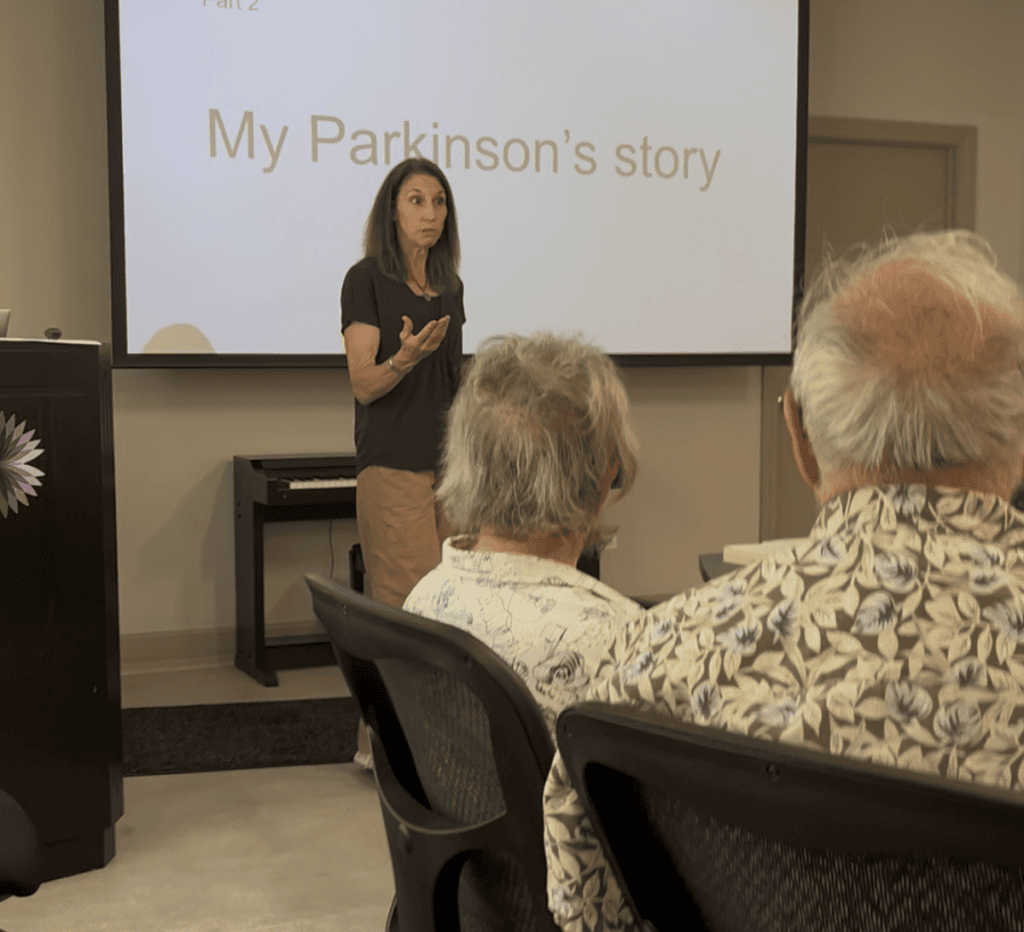
My story: Part 2
Clues led me to believe something was a little weird with me. I was 54 in the summer of 2018, and I noticed some shakiness on my right side. It became a bit obvious, so I thought, “I’m going to see a neurologist.”
He diagnosed me with essential tremor in my hand, which is a common misdiagnosis of Parkinson’s disease. He said, “You’ll just have to live with it –- but it’s slow growing.”
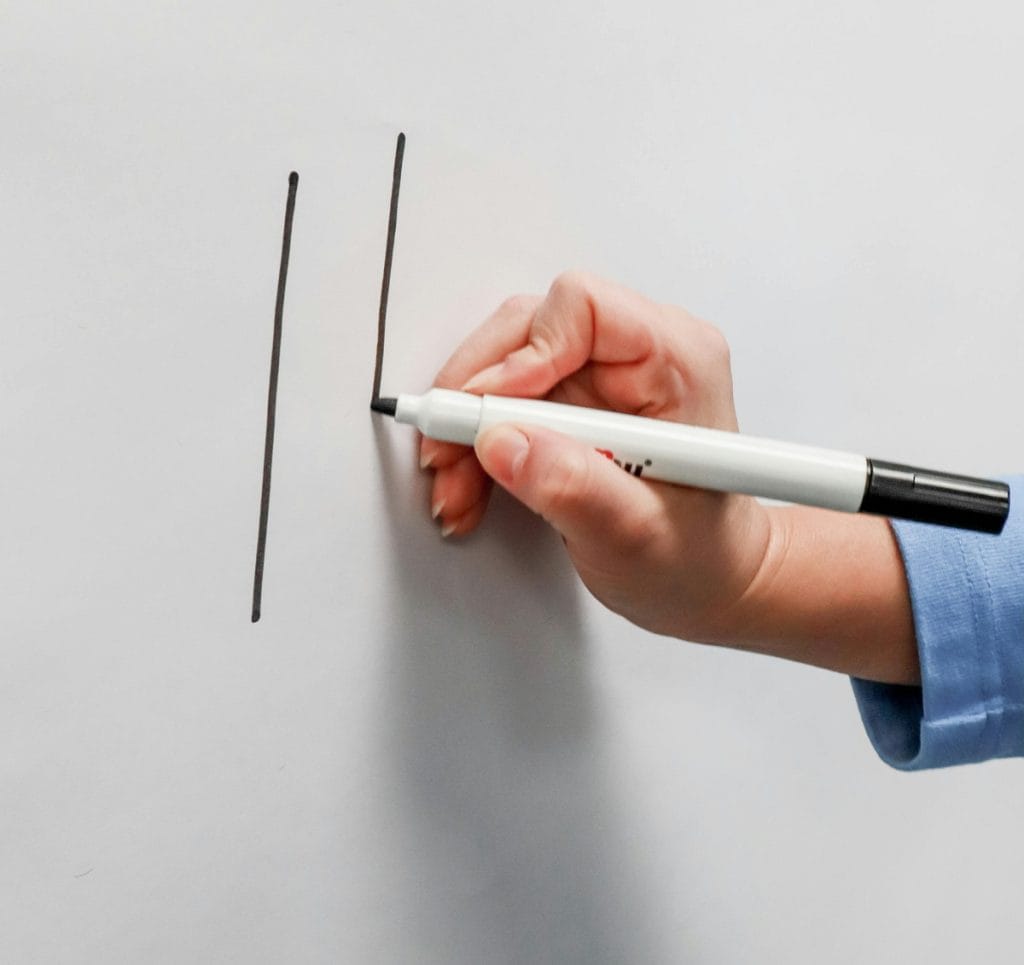
Then there was the time I was substitute teaching, and I would write on the board and my hand would be jerking all over. I couldn’t even make the words legible. I was subbing in a second-grade art class, trying to show a technique on the board for the kids to do.
Then this very precocious girl shouted from the back, “Why is your hand shaking?”
The last clue I had that something was amiss was when I was hiking in the woods with a youth group. While on the long excursion, I noticed my arm wasn’t swinging. OK, this is a classic Parkinson’s symptom –- right? I would walk more, and it would happen again. And again.
My own research
So I did what you should not do: I went to the Internet. That was a lousy idea because doing so just freaks you out and gives you all these frightening ideas that may not be true. Still, I started reading about Parkinson’s and all the symptoms that I was seeing in myself.
I went back to the neurologist in January of 2020, and he said, “Yeah, things are moving a little faster than I thought. Why don’t you go get a DaTscan?”
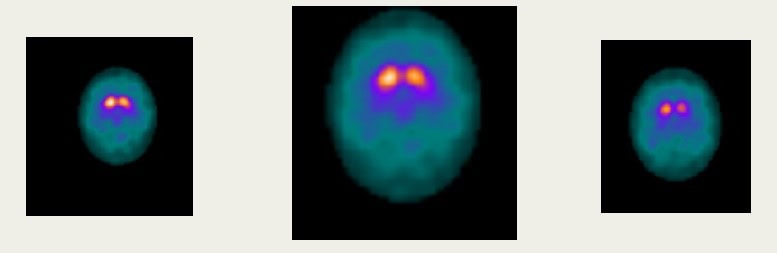
He sent me over to the hospital and I got my scan.
I didn’t know how to read the scan results. The scans looked like faces of aging hippies in psychedelic colors. And of course the people there at the lab never tell you whether it’s positive or negative, but I went back to the doctor and he came into the room to tell me I indeed had Parkinson’s disease.
I don’t want to be critical, but I was taken aback as he delivered that statement and a few facts about the disease. It felt cold, as if I was being read my Miranda rights: “You have Parkinson’s, you should blah blah blah …. He gave me a prescription for Ropinirole and then sent me on my way.
That’s when I decided I wanted to get somebody who was a specialist on this and maybe had a little bit more information to give me.
No shock, just worry
My reaction to the idea that I had Parkinson’s was not one of shock because I sort of had prepared myself by reading on the Internet. So in this case the Internet was right! But I was still scared because I didn’t know what my children would think, I didn’t know if I would live to see my grandchildren grow up, and my husband was in denial over the whole thing.
It took him a while to really understand it. I sort of warmed up to it, but it took him longer.
I found a movement disorders center downtown. My new doctor told me that the type of Parkinson’s that I had was tremor-based, and she said that’s good because “I know I can treat that.” There’s also a gait-based Parkinson’s, which is a little more difficult to treat, she told me.
My little secret
Again, this was 2020, and what was going on? The pandemic! Months before, I had switched my career back to news editing, a desk job.
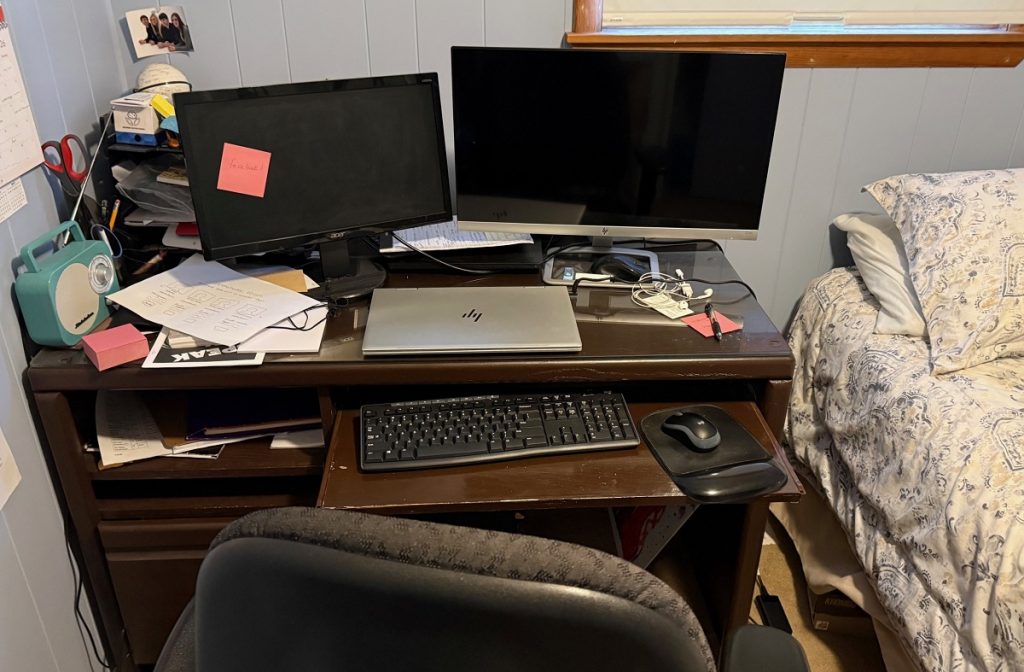
All the people on my team set up shop in their basements and bedrooms and dining room tables. And it was isolating.
However, for me it was really easy to hide the fact that I had Parkinson’s because I never went anywhere. I didn’t have to tell anybody, and I didn’t want to.
Maybe you felt this way at first. I didn’t want the disease to define me.
We don’t want to be known only as the woman or man who has Parkinson’s.
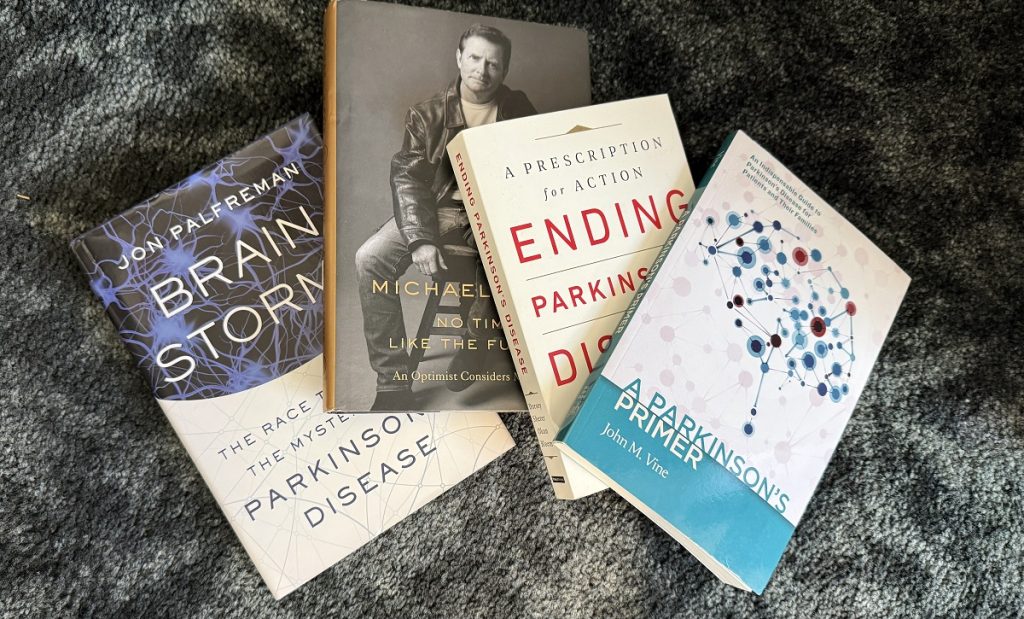
I learned about Parkinson’s disease by reading as much as I could. The local library had books about Parkinson’s. Michael J. Fox became my new hero.
I told our four grown kids about my disease, but not until after four months. You may think it was wrong that I kept it a secret even from my kids -– because I could. Their reactions were all different: one of them cried, one started asking a lot of questions. Based on their personalities, how they handled the news was very different.
I slowly started to tell others. But I really let go of my secret when family members planned a Mount Kilimanjaro climb for 2022 and invited me and my husband, Jon, to come along.

We were thrilled, and I decided last minute to do a fundraiser for Parkinson’s research. I sent emails to 80 friends and family asking for their donations to help eradicate Parkinson’s. Meanwhile, I would climb the mountain to prove that I was serious about this. People gave generously.
That became the way I outed myself, or let people know about my diagnosis. It’s become easier for me to tell others since then.
Do you have a “diagnosis story” to tell? I’d love to hear about it. Email me at unshakablehiker@gmail.com.


Thank you for sharing your story! Honest, human and inspirational
Duane
Thanks for the encouragement, Duane! My hope is that the more we share, the more Parkinson’s will be understood.
Thanks for taking us along on your journey. I have enjoyed all of your posts and photos, especially the Alps! We have to keep moving forward and living life to the fullest.
Well stated!
As always, great articles, stories, etc. An informative and sobering read. 🦘❤️
Thanks, you are kind to say so.