
My story (Part 1): Reaching the highest point in 49 states
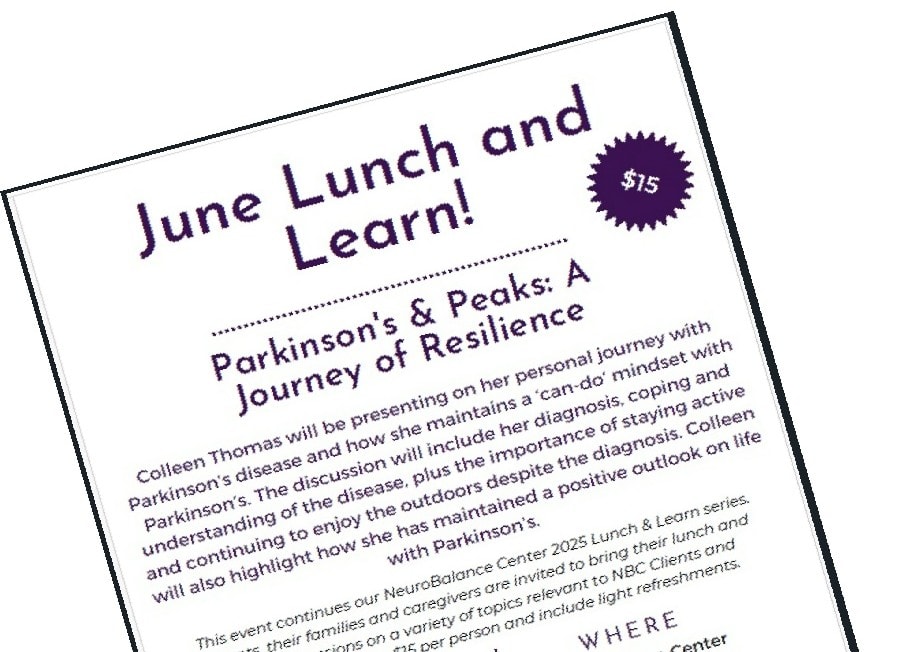
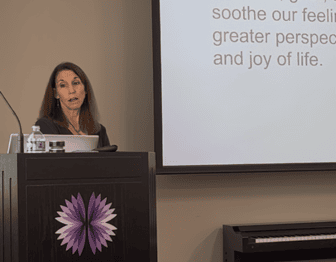
I was invited to speak about my outdoor adventuring with Parkinson’s to a group at Neurobalance in Barrington, Illinois. It’s a center with services for people who face the challenges of a movement disorder.
My presentation got a little personal at times, and I hope it resonated with at least a listener or two.
I thought I’d share it more widely.
Over the next couple of weeks, I’ll post three edited excerpts from the three topics I covered.
Part 1: How I reached the highest point in 49 states
Part 2: When a doctor told me I have Parkinson’s
Part 3: Three things that help me stay positive
Maybe a few of you will relate in some way to my experiences with adventuring or with Parkinson’s disease — or both!
My story: Part 1
I love to go hiking. I love mountains, and for a Midwest girl that’s kind of odd. I did live out West for a while, and I just adopted the mountains as my second home. I love wildflowers, and I love being close to nature. It brings me closer to God, makes me feel good about my life, and lifts my spirits.
I don’t know if you have felt that way, but for me it started at an early age. My parents would drag us to camping places. My dad taught my sibs and me how to be comfortable outdoors.
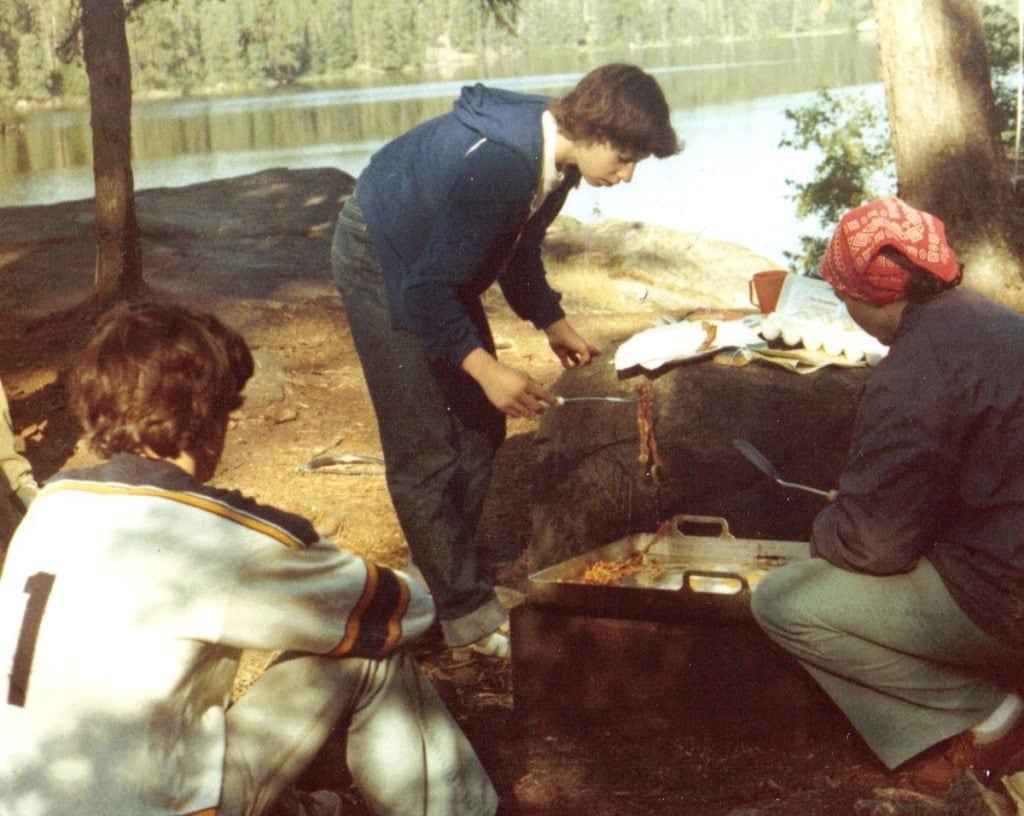
This is me as a teenager with my family at the Boundary Waters in Minnesota. Later, my husband, Jon, and I would teach our kids the same thing.
Getting into climbing
There was a Scout troop at our church that my husband and son got involved with, a troop focused on climbing. They would go to the cliffs at Devil’s Lake in Wisconsin. In time I joined the troop as well and got certified as a climbing instructor, and Jon and I took boys and girls groups on climbing and rappelling trips.
Then we got kind of more … well, you know how when a guy gets a motorcycle, and he just wants to keep getting a bigger motorcycle? We just wanted bigger mountains, and Colorado was a good place to find them. In 2006 we climbed our first big mountain, Mount Harvard.
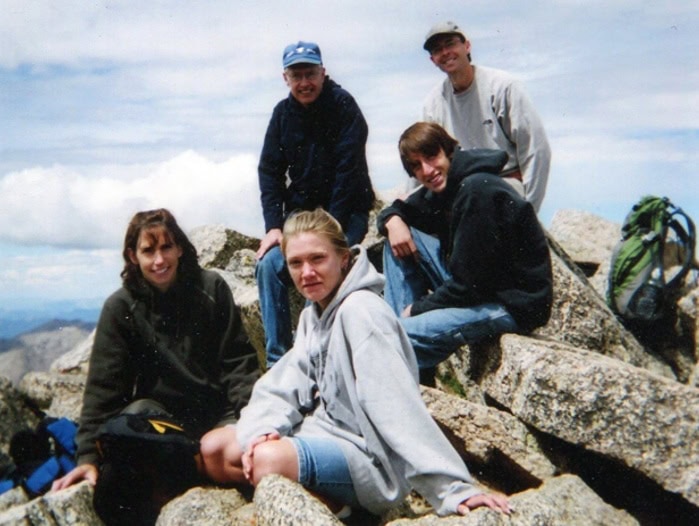
Harvard is one of those where you don’t have to use climbing harnesses and carabiners. You just walk up to the top.
But we did discover what high altitude was like –- and it is not a good feeling.
There are more than 50 “14’ers,” or 14,000-foot mountains, all over Colorado. When you get up that high you start to feel really tired, it’s hard to breathe, and you may even throw up. You just want to sit and rest.
In spite of that, we were hooked.
Next we climbed the Grand Teton in Wyoming. That one’s a technical climb: You have to bring ropes and carry all the gear. We found our way to the top!
A one-of-a-kind club
Jon and I discovered, and then joined, a quirky little group online called the High Pointers Club. Every state has a high point –- even really flat states have one. And this group wants to preserve every state high point for those who set a goal to stand on every one of them.
You’ve got some high points that you can drive to and others that you have to train for to make it to the top.
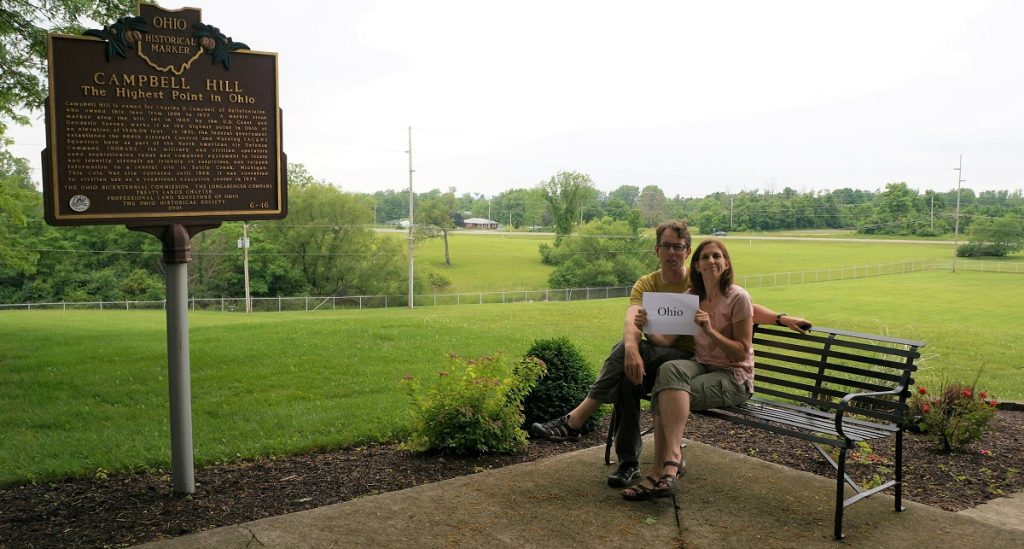
This is the Ohio high point. It’s at a campus called Hi-Point Career Center. They installed a little bench and a plaque there to mark the state’s highest ground.
Then there were some super tough ones, like Wyoming’s.
This is called Gannett Peak, and you can see there was real danger involved with getting to the top.
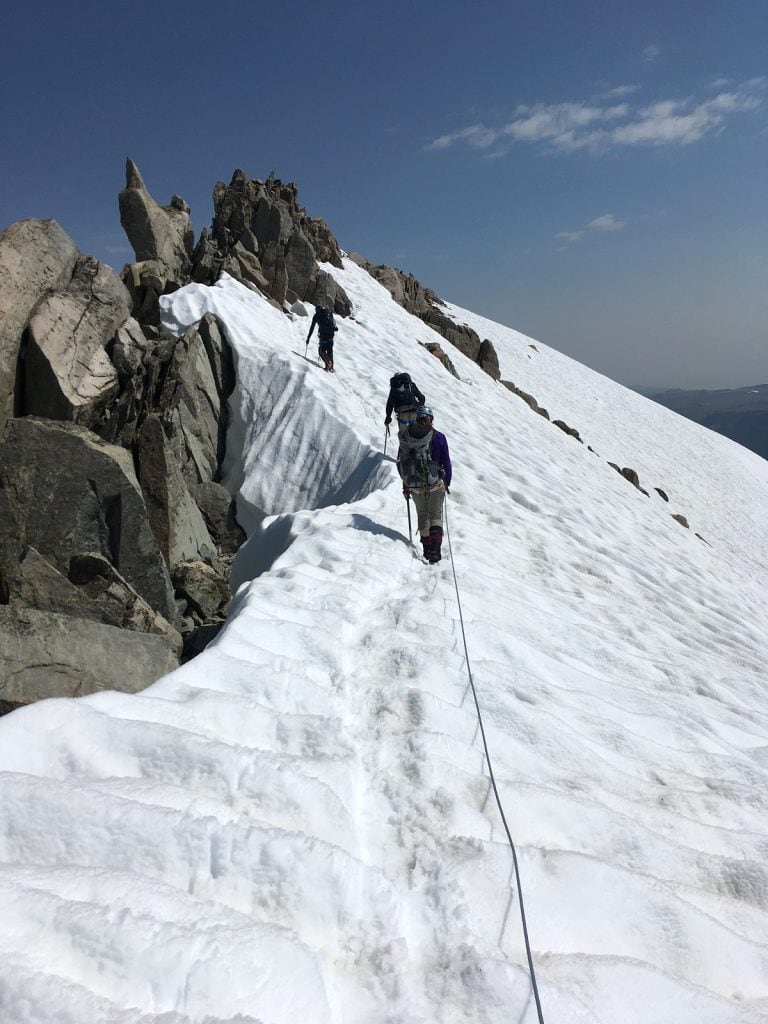
With a couple of the peaks, we had to make two attempts because something prevented us from getting to them. We learned to avoid what is called “summit fever” — getting there no matter the risk. In Washington state, our first guided group on Mount Rainier had to turn around at 2 a.m. due to a lightning storm.
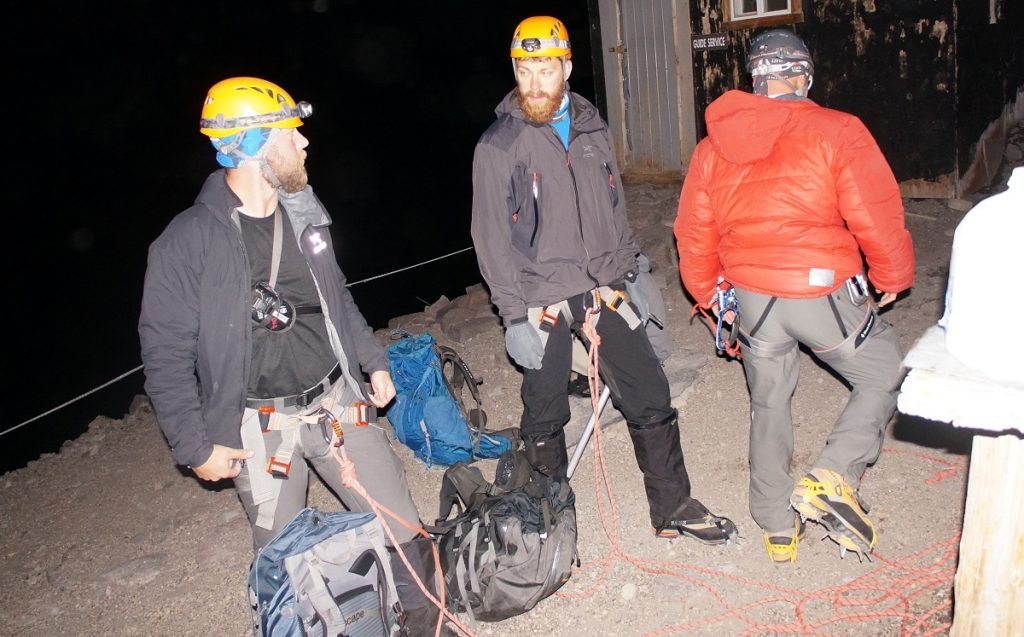
We had put a lot of money and time in for that one, but we had to go back and do it another time.
Let me add a caveat here: Jon and I never planned to do all 50 states because Denali in Alaska is 20,000 feet high, and climbing it requires a lot of time and resources – and people die on that mountain every year. So we were going for 49 high points. And that was OK.
A different challenge
Our collection of high points was growing, but then this happened.
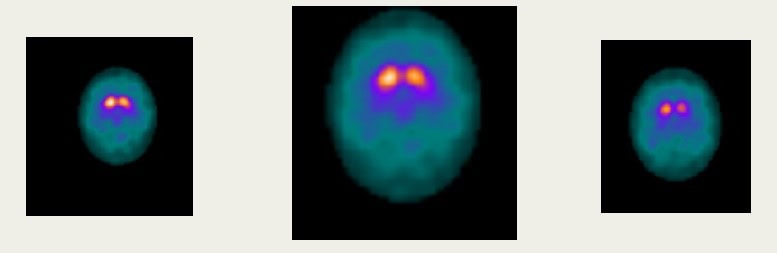
It’s called a DaTscan, and it is what you can get if your doctor’s not quite sure if you have Parkinson’s.
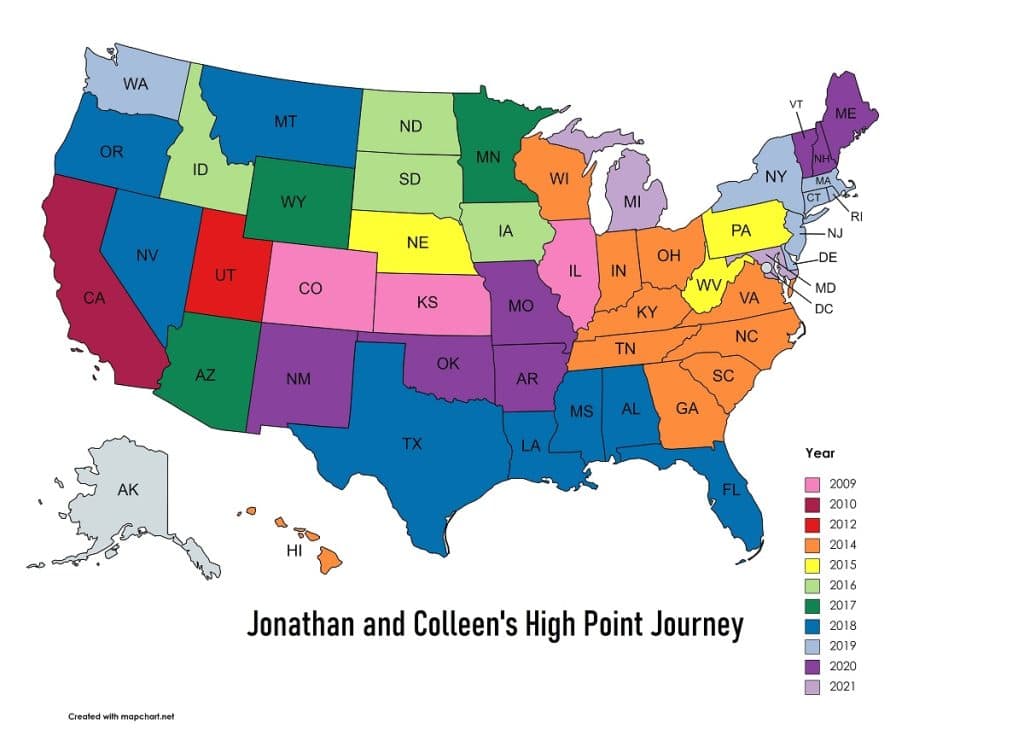
I got a Parkinson’s diagnosis in January of 2020. Then in March the pandemic started, putting another wrench into our plans. We still had nine high points to go!
I didn’t know what was going to happen with my health, so we hurried to finish them within a year of my being diagnosed and during the lockdown.
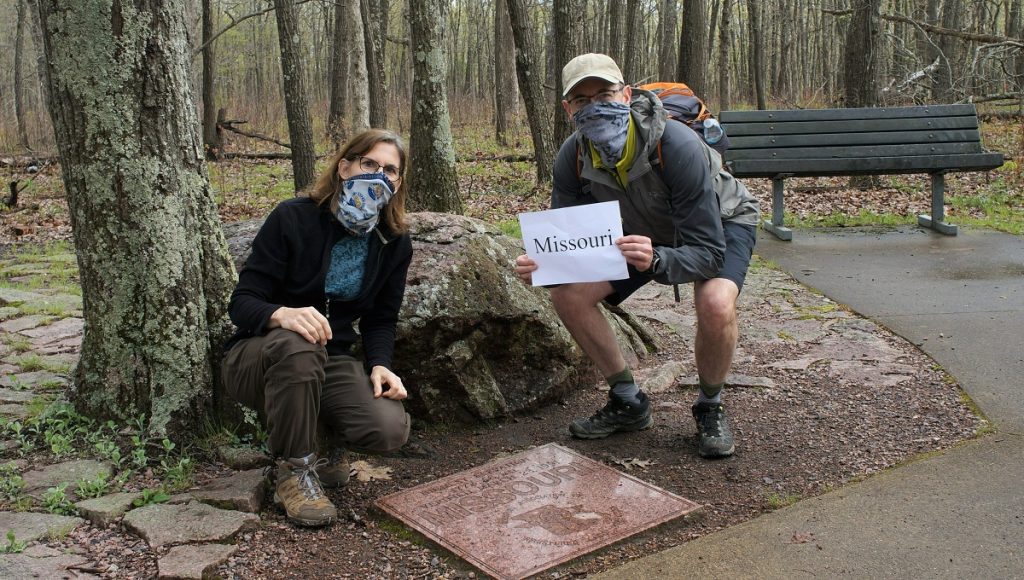
We wore masks for the Missouri high point because, well, who wouldn’t want to remember the pandemic?
Our final high point was in Michigan’s Upper Peninsula. It was the kind where you could drive up close and then take a short walk to it.
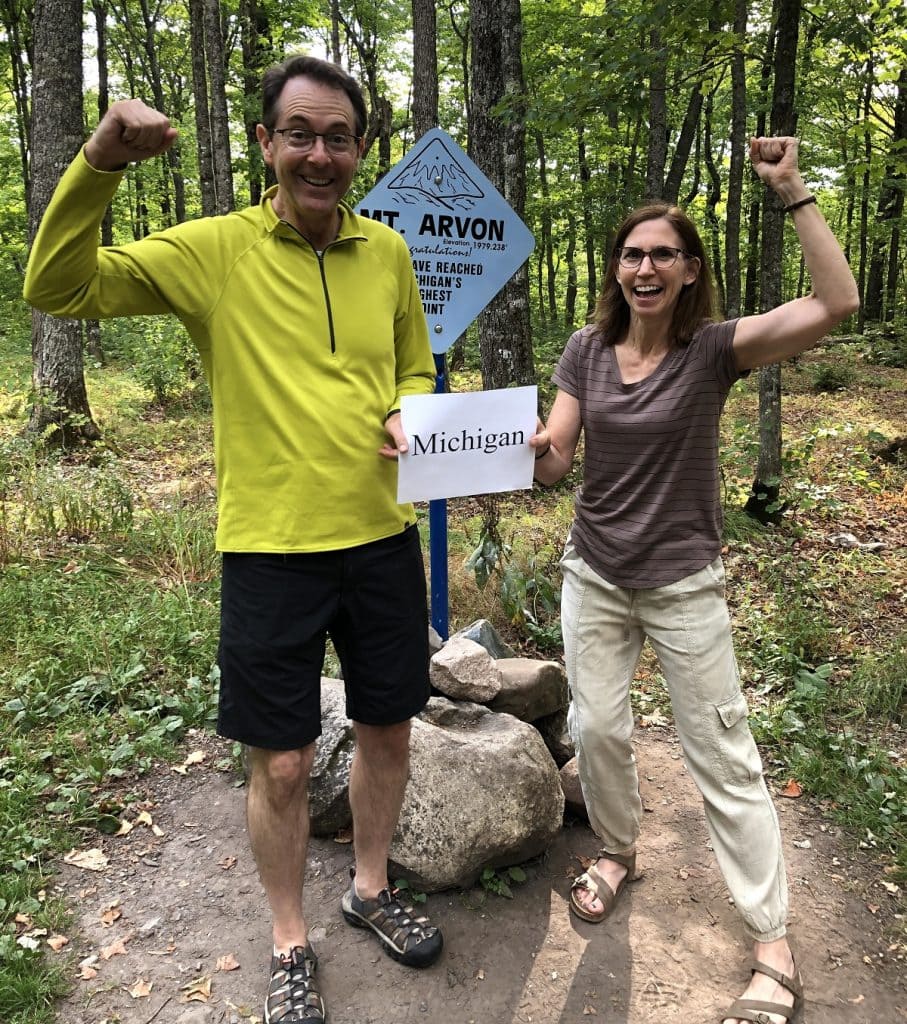
Not the most climactic finish, but we were quite happy.
Then all our kids and grandkids gathered in a woodsy cabin and gave us a surprise party.
That was all nice, but with my diagnosis I started to panic. I wrote in my journal at the time that “I know my time for good years is shorter than for people without Parkinson’s,” and I kind of viewed myself as not being able to plan too far in the future.
Climbs of our lives
So one year at a time we’ve been tackling some other climbs that we have had our hearts set on. We plan each trip only one year out or less.
First we climbed Mt. Kilimanjaro in Africa with family members in 2022.
We’d always wanted to go to Machu Picchu in Peru, and in 2023 we made it there with two relatives. The ruins were stunning, of course, but what was really getting our attention was that mountain in the background.
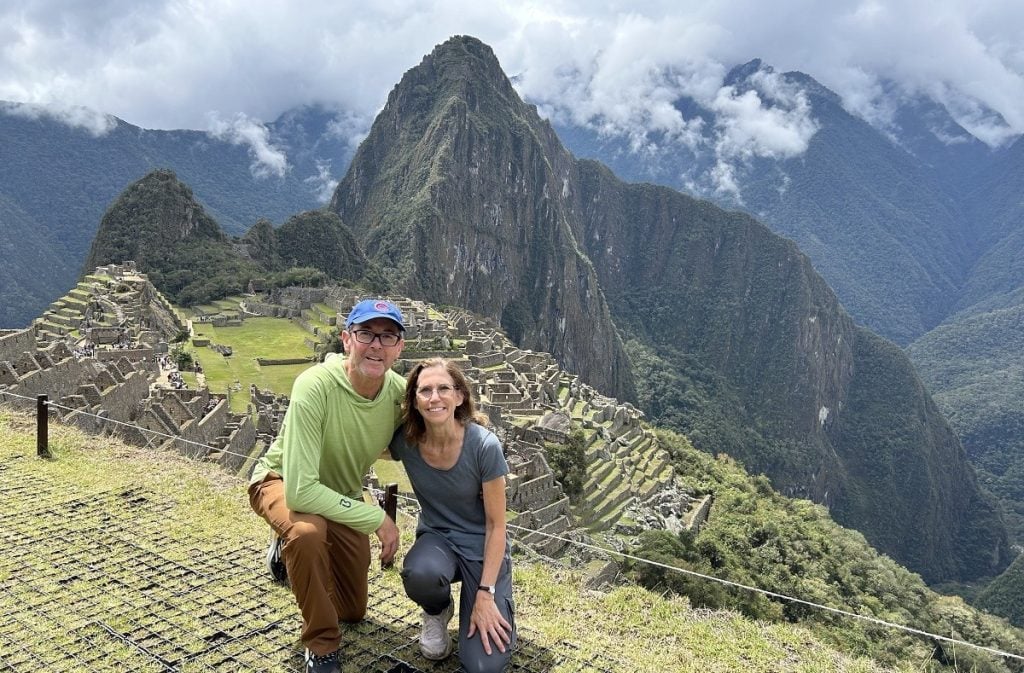
We got a permit and a guide, and he showed us the way to the top.
In 2024 we wandered in the Swiss Alps.
In 2025 we hiked the Havasupai trail in Arizona.
Hope for the future
I started my journal right after I got my diagnosis and wrote this:
“As I meet more people with Parkinson’s who’ve been diagnosed for 10 or even 20 years and are still going about their lives fairly well, I have hope that I’ll be able to continue doing important things. I’m still reluctant to plan too far in the future because you never know. This disease can have a mind of its own.”
So I feel really lucky to have had these opportunities. And I don’t know how much longer I’ll be able to, but that’s just part of the deal.


Great, inspiring piece!
I love this! All the wonderful adventures of ascending to the heavens. You are killing it.
Thanks. I’m glad that parts of all that ascension are in my past now!